
Rafael Bargiela
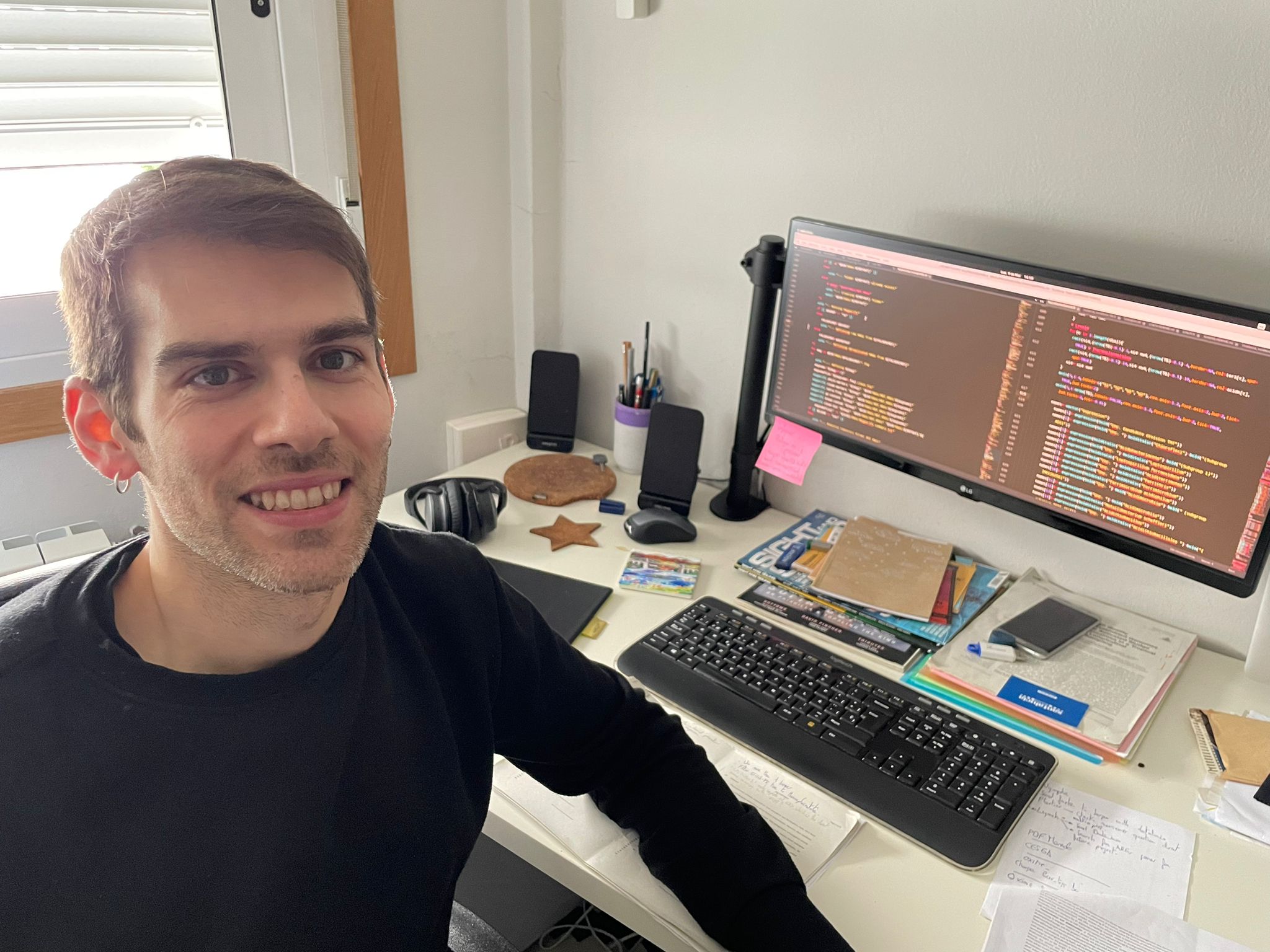
R. Bargilea has a Degree in Biology from the Complutense University of Madrid, UCM (2007), a Master Degree in Bioinformatics (UCM, 2008), another Master Degree in Microbiology from the Autonomous University of Madrid, UAM (2012). He obtained his PhD in Biology from UAM (2016), working at Institute of Catalysis (ICP-CSIC). He moved to Bangor University (UK) for his postdoctoral stay on August 2017 and returned to ICP-CSIC on January 2024.
Rafael Bargiela graduated in Biological Science from the Complutense University of Madrid in 2007. In 2008, he obtained a Master’s Degree in Bioinformatics and Biological Sciences from the same university. In 2009, RB began his scientific career with a Rafael Calvo Rodés grant from the National Institute for Aerospace Technology (INTA), at the Centre for Astrobiology (CAB-CSIC), and started a two-year period as a bioinformatics technician. Here, RB acquired experience in massive DNA sequencing technologies and further assembly and analysis of genomes from biotechnologically relevant extremophiles. In January 2011, RB moved to the Institute of Catalysis and Petrochemistry (ICP-CSIC), where he obtained his Master’s Degree in Microbiology (2012) and subsequently his PhD (2016, awarded the Extraordinary Prize) at the Systems Biotechnology Group, led by Prof. M. Ferrer. In August 2017, RB began a postdoctoral stay at the Center for Environmental Biotechnology (CEB) at Bangor University (UK), becoming part of the Research Software Engineers team of Supercomputing Wales, led by Prof. Peter Golyshin. In January 2024, he re-joined the ICP-CSIC, in Prof. M. Ferrer’s Systems Biotechnology group, to implement New system-driven bioremediation of polluted habitats and environment. At both the ICP-CSIC and Bangor University, he has established metadata-driven/trained, in silico techniques that utilize state-of-the-art bioinformatics, artificial intelligence, and molecular modeling tools. This include implementing the standardization and validation of bioinformatics processes, analyzing Next-Generation Sequencing (NGS) results, assembly and taxonomic classification of massive sequencing reads, massive data management to ensure suitability for taxonomic and functional annotations, integration into multi-omics studies, extending to metabolic (or functional) understanding, biostatistics, visualization, and engineering. Through the application of these tools to multiple microbial communities and microorganisms, their genes, proteins, enzymes, and metabolites, R. Bargiela achieved numerous environmental, biotechnological, and biomedical-related accomplishments and innovations. Currently, he has an Atracción de Talento «César Nombela» Grant from the Comunidad Autónoma de Madrid, running the project BIORE2AIRCRAFT.
In the Systems Biotechnology Group since 01/01/2024
