
Prof. Manuel Ferrer Martínez
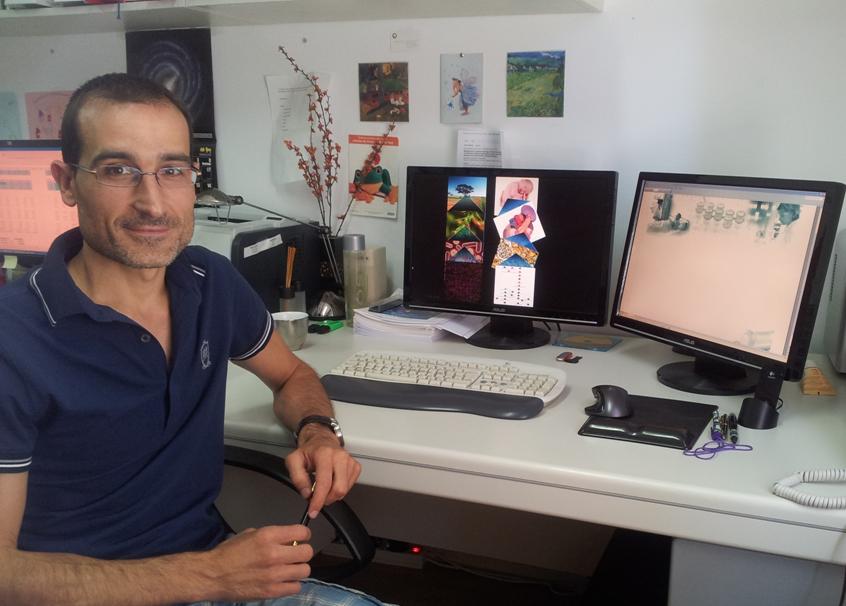
M. Ferrer graduated in Chemical Sciences by the University of Granada in 1994. Ferrer graduated in Chemical Sciences by the University of Granada in 1994. In the same year, he began his scientific career at the Institute of Catalysis that belong to CSIC (CSIC-ICP), obtaining his PhD in 1999. In January 2001 he started a postdoctoral stay at the Helmholtz Centre for Infection Research in Germany, after which he returned in October 2003 to the CSIC-ICP with a Ramón y Cajal fellowship. In June 2006 he was appointed Científico Titular. In July 2009 he promoted to Investigador Científico. M. Ferrer (H index: 56; 9219 citations) is currently Professor and the head of the Systems Biotechnology group (https://www.sysbio.csic.es/), valued among the best in the Area of Chemistry by CSIC. The group is currently composed of 2 postdoc and 3 predoc. In the last ten years the research by Prof. Ferrer has been multi- and inter-disciplinar, with extensive track records and expertise in all steps from enzyme discovery (leading scientist in meta-genomics) to engineering and implementation in environmentally-friendly processes and products, and OMIC techniques.
Subsequently, the accumulated knowledge of the study of hundreds of new enzymes combined with engineering and material science techniques allowed him to undertake leading investigations aimed at achieving a detailed understanding of the mechanisms underlying or tuning the properties of biotech-relevant enzymes; serve as main achievements a work in Nat Biotechnol [4:2156 (2013)] that investigates the evolution of cold-adapted enzymes; also a publication in ACS Nano [14:17652 (2020)] proposing a new strategy of enzyme supramolecular engineering based on a meticulous modification of a synthetic shell that surrounds an immobilized enzyme. Most recently, he acquired expertise in computational techniques which constituted the basis of a novel research addressing the design of a new generation of artificial enzymes with multiple active sites, the PluriZymes [Nat Catal 3:319 (2020); cover]. The implementation of massive OMICS and bioinformatics techniques, allowed him to be also a leading scientist to study the functioning of microbes and microbial communities; serve as examples, the studies on the origin of key microbial metabolisms (Nat Microbiol 5:1428 (2020)) and the interaction between the intestinal microbiota and diseases (e.g., Gut 62:1591 (2013); Trends Microbiol 24:402 (2016)).
